 |
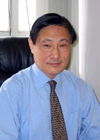
Wong, Patrick Y.D. |
Professor
Emeritus Professor of Physiology, Department of Physiology, The Chinese University of Hong Kong, Room 408B, Shatin, N.T., Hong Kong, China.
Tel: +852-2609 6883 Fax: +852-2603 5022
Email: patrickwong@cuhk.edu.hk |
Education
B.A. (1971) University of Cambridge
Ph.D. (1973) University of Cambridge
D.Sc. (1989) University of London
Sc.D. (2003) University of Cambridge
Research Interests: Epididymis / sperm maturation
Solute and water transport across epithelia underlies numerous physiological processes ranging from intestinal absorption to secretion of cerebrospinal fluid in the brain. The subject currently offers some of the greatest challenges to the aspiring cell physiologists. How are transport proteins distributed between the two surfaces of an epithelial cell? How are they controlled? What are the driving forces? And what goes wrong with these mechanisms in clinical disorders such as cystic fibrosis, hydro-cephalus and secretory diarrhoea? The study of electrolyte and water transport across the epididymis (part of the male reproductive tract) is my major interest. The cells lining this part of the male reproductive tract maintain a normal fluid environment for the spermatozoa by virtue of their ability to transport electrolytes and water. Studies of the mechanisms of electrolyte and water transport in the epididymis therefore have important implication in our understanding of male reproductive functions. It has been shown that secretion of fluid by the epididymal cells involves specific membrane proteins called ion channels and ion transporters which are under the control of intracellular messengers generated when the cells are stimulated by neurotransmitters and hormones. Evidence has accumulated that defective operations of the membrane transport proteins are responsible for some cases of male infertility.
To explore the role of the epididymis in the physiological control of male reproduction and in pathological disturbances, a battery of modem techniques is currently in use. These include the patch-clamp methods, short-circuit current technique, and single-cell measurements of intracellular ions using fluorescent dyes. The laboratory has close links with clinical departments in the Prince of Wales Hospital and laboratories abroad and receives generous supports from both local and overseas research grant funding agencies.
Honorary Appointments
Honorary Professor of Physiology, University of Hong Kong
Visiting Professor of Physiology, University of Sydney
Visiting Professor, Shanghai Second Medical University
Visiting Professor, Shanghai Institute of Physiology
Visiting Professor, School of Life Sciences, University of Shanghai
Guest Professor, Beijing Medical University
Publications (.html)

|









