 |
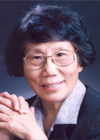
Yong-Lian Zhang |
Professor, Academician
Institute of Biochemistry and Cell Biology, Shanghai Institutes for Biological Sciences, CAS
Phone: 86 21 54921163
Email: ylzhang@sibs.ac.cn |
Zhang Yonglian, academician of Chinese Academy of Sciences. She was born in 1935 in Shanghai. After graduated from the Department of Chemistry, Fu-Dan University in 1957, she has been working on various researches in the Shanghai Institute of Biochemistry and Cell Biology, Chinese Academy of Sciences. She went to the Molecular Endocrinology Lab in the Imperial Cancer Research Fund (ICRF), London for refreshing her knowledge and techniques in molecular biology field during 1983-1985. Afterwards, She has been having a serious of scientific collaborations with the labs all over the world (ICRF, UK; Uni. of Chicago, Uni. of Wisconsin at Madison, Uni. of North Carolina, NIEHS USA; ERUSMUS Uni. the Netherlands; Uni. of Sydney, Australia; Hong Kong Chinese Univ.)
After getting 20 years radiobiology research experiences, she has been working on the actions of steroid hormones independently in the middle of 1980s. Especially to be a pioneer in this particular field in China she has been focusing on studying the molecular mechanisms of androgen regulation of eukaryotic gene (rat PSBP) transcription. By promoter analysis, she identified four cis-regulatory elements and some trans-actin factors and thus provided strong evidence to support that the general elements on the promoter also have some tissue or cell-specific trans-actin factors interacting with for cooperation. This achievement won the first-class merit in Natural Sciences awarded by Chinese Academy of Sciences and the 3rd class national merit in natural sciences. Besides, she made efforts to apply these knowledge and techniques to breast cancer and prostate cancer diagnosis. By collaboration with the Shanghai Hospital for Gynaecology and Obstetrics, they observed that estrogen and progesterone receptors involved in the improvements of the menopause syndrome by the Chinese herbs ?Gen-nian-jian." This work was also won a 2nd class merit in science and technology awarded by Shanghai government. Since the middle of 1990s, She shifted her research interests on studying gene expression program during spermatogenesis in testis and sperm maturation in epididymis. She not only did contribution in the roles of an orphan nuclear receptor RTR in the above tissues but also identified 15 novel genes specifically expressed in epididymis of monkey and rat (the monkey data were obtained by collaboration with the lab in University of North Carolina at Chapel Hill). These results laid a solid foundation for the epididymis functional genome studies. Besides, she discovered that one of the novel gene named Bin1b was not only related to fertility but also a natural antimicrobial peptide which was the first inner defense system related gene found in epididymis. These results have been published on the 2nd of March of 2001 on Science.
Education
1957: B.S., Fudan University, Shanghai, China (Chemistry)
1978: Ph.D., Shanghai Institute of Biochemistry (Biochemistry)
Employment and Experience
1957-1978
1978-1982
1983-1985
1985-1986
1986-1991
1988 & 1989
1989-present
1990-1991 &
1991-1992
1991-present
1993
1995
1997 Jan-Apr
1999 Sep-Oct |
Division of Radiobiology, Shanghai Institute of Biochemistry, Academia Sinica, Shanghai, China. Basic biological research in early diagnosis of radiation injury; selection and synthesis of drugs for preventing and curing radiation diseases.
Ph. D. (equivalent) Division of Steroid Hormones Biochemistry, Shanghai Institute of Biochemistry. Estrogen receptor assays and selection of biochemical markers for studying the actions of sex hormones.
Visiting Scholar, Molecular Endocrinology Laboratory, Imperial Cancer Research Fund, London, UK. characterization of rat prostatic steroid binding protein(PSBP) gene expression.
Assistant Professor, Division of Steroid Hormones Biochemistry, Shanghai Institute of Biochemistry. Mechanisms of Androgen Regulation of Gene Transcription.
Associate Professor, Division of Steroid Hormones Biochemistry. Mechanisms of Androgen Regulation of Gene Transcription.
Visiting Scholar, Molecular Endocrinology Laboratory, Imperial Cancer Research Fund, London, UK. (July-November 1988 and June-October 1989). Gene promotor analysis.
Head of Sex Hormones Action Laboratory, State Key Laboratory of Molecular Biology, Shanghai Institute of Biochemistry. Mechanisms of Androgen Regulation of Gene Transcription. Studies of gene program during spermatogenesis in testis and sperm maturation in epididymis.
Visiting Scholar, Department of Human Oncology, University of Wisconsin, Madison. (July 1990 to February 1991 and June 1991 to January 1992.). Androgen responsive elements searching.
Professor, Shanghai Institute of Biochemistry.
Visiting Scholar, Molecular Endocrinology Laboratory, Imperial Cancer Research Fund, London. (September-November). Regulation machanism of gene transcription at the chromatin level.
Visiting Scholar, The Laboratory for Reproductive Biology, University of North Carolina at Chapel Hill. Chapel Hill. NC. U.S.A. Studies of the nuclear orphan receptor in spermatogenesis.
Visiting Scholar. The Laboratories for Reproductive Biology. University of North Carolina at Chapel Hill. Chapel Hill NC U.S.A. Cloning and sequencing of a novel orphan receptor.
Visiting Prof., Dept. of Endocrinology, Division of Andrology, Sydney University, Sydney, Austrilia. Hormone regulation of RTR gene expression in hpg mice and testing a potential diagnosis marker for prostate cancer. |
Editorial Position
Cell Research, Member of Editorial Board
Acta Biochimica et Biophysica Sinica, Standing Member of Editorial Board
Asian J. Andrology, Editorial Board
Chinese Science Bulletin, Associate Editor in Life Science
Andrologia, Editorial Board
Publications (.doc)

|








